
In My Mind’s Coral, Mother Still Calls Us from Inside
by Jennifer G. Lai
that summer, we were little chemists, bakers,
storefront merchants hawking our wares. I had never
been to a night market before, but mother told me
they had everything you could ever want. for us,
there were slick mud pies, glossy from the cool shade,
blistering on the raw white concrete. sunset-pink
petals from the Big House down the street. warm
daisy chains, holy dandelions, dry whispering grass.
back then, the boy next door was just a boy next door.
whatever he said I forgot by morning. whenever we could play,
we played. whenever the leaves were plump, lucky, full
of milk — we collected them.
one day, a rare antidote for deadly poison
and another, a welcome cure for broken arms,
and then a lost currency
and sometimes new shampoo for my dolls.
what we knew then, was there was nothing
that could hurt us save for scraped knees,
or the fat green Japanese beetle
shimmer-zip buzzing past our ears.
we just rinsed off our dirty heels,
hosed off plastic sandals and that was good enough.
the wasps’ nest in the rafters, broken,
too high up to see.
Originally published in Pigeon Pages.
Reprinted with permission.

Jennifer G. Lai is a poet, visual artist, storyteller, and audio producer. Her work has appeared in Pigeon Pages, ANOMALY, Canto Cutie, The Slowdown, and Angry Asian Man, among others. As part of the first cohort of Catapult’s 12-month poetry generator with Angel Nafis, she completed her forthcoming manuscript, DUST WE CARRY.
Her visual work has participated in exhibitions at Jip Gallery and Olympia Gallery (A Place To Visit, V.3) and in Chelsea Market (Futures Ever Arriving). In 2021, she and collaborator Angbeen Saleem received a grant from The New York Foundation for the Arts to put on an interactive show, TAKE WHAT YOU NEED, as part of Gowanus Open Studios.
She currently lives in Brooklyn and on the internet. Find her on Twitter @jenniferglai
We often dismiss it as nostalgia when we look back with joy on those simpler, more innocent times in our lives. Yet as Jennifer G. Lai’s poem illustrates so well, certain periods in life simply are less complicated, before our culture, families, and peers place their expectations and limitations on us, before a larger awareness of the world seeps in. Here, Lai transports us back to a summer in childhood when she and her friends made their own worlds to inhabit, and found the miraculous in things like “daisy chains, holy dandelions, dry whispering grass.” They were oblivious of all danger, and their own sexuality and gender because, after all, “the boy next door was just a boy next door.” One can’t help but note the wide space that Lai leaves in the text here as if to underscore how differently these young women saw themselves during that summer. By the end of the poem, we understand that “the wasps’ nest in the rafters, broken,” might stand for all the difficult knowledge that remains too far off, “too high up to see” for these friends. Yet by admitting us into her private, long-ago world, where the worst worries were “scraped knees,/or the fat green Japanese beetle/shimmer-zip buzzing past our ears,” Lai’s speaker reminds us of the wonders that might still be possible, if only we can reclaim that freer, more expansive way of being from our child selves.
Invitation for Writing & Reflection: Can you remember a time from childhood when the world was a place of safety and wonder (even if it wasn’t always that way for you growing up)? Describe some of the private rituals and delights from that time, like the “mud pies” or “leaves . . . full of milk” that Lai lists for us. You might try beginning with Lai’s phrase, “That summer, we were . . . ” and see where it takes you.
POETRY SELECTION AND COMMENTARY BY JAMES CREWS
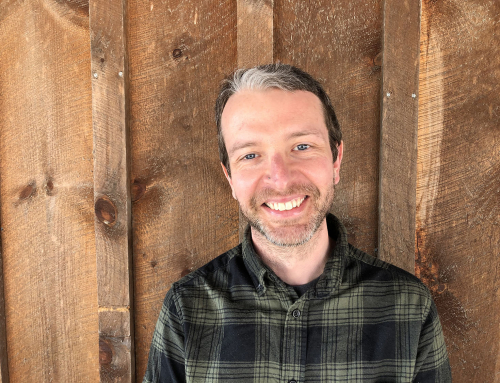
James Crews is the author of four collections of poetry: The Book of What Stays, Telling My Father, Bluebird, and Every Waking Moment. He is also the editor of two anthologies: Healing the Divide: Poems of Kindness and Connection and How to Love the World: Poems of Gratitude and Hope. His poems have appeared in Ploughshares, The New Republic, The New York Times Magazine, The Sun, and have been reprinted in Ted Kooser’s American Life in Poetry and featured on Tracy K. Smith’s podcast, The Slowdown. James teaches at SUNY-Albany and lives with his husband in Vermont.
Thanks to hundreds of readers who have given donations big and small, Gwarlingo remains ad-free. Donors who give $50 become members. If you love Gwarlingo, please consider giving back.



Wonderful way to begin a Sunday!