
To kick off our new column Six Books’ Stories, we invited curator Denise Markonish to share her experiences with several books of her choice. Markonish is the senior curator and director of exhibitions at MASS MoCA, where—as Samuel Rowlett writes—she “tirelessly champion[s] artists and their art,” she’s “not afraid to thumb her nose at the art establishment, to take risks or to fail” and “she strongly believes that artists belong at the very top of the art world hierarchy.” She also has such an wonderful appreciation for beautiful books that she has actually filled our six books column with seven. —Corwin Levi
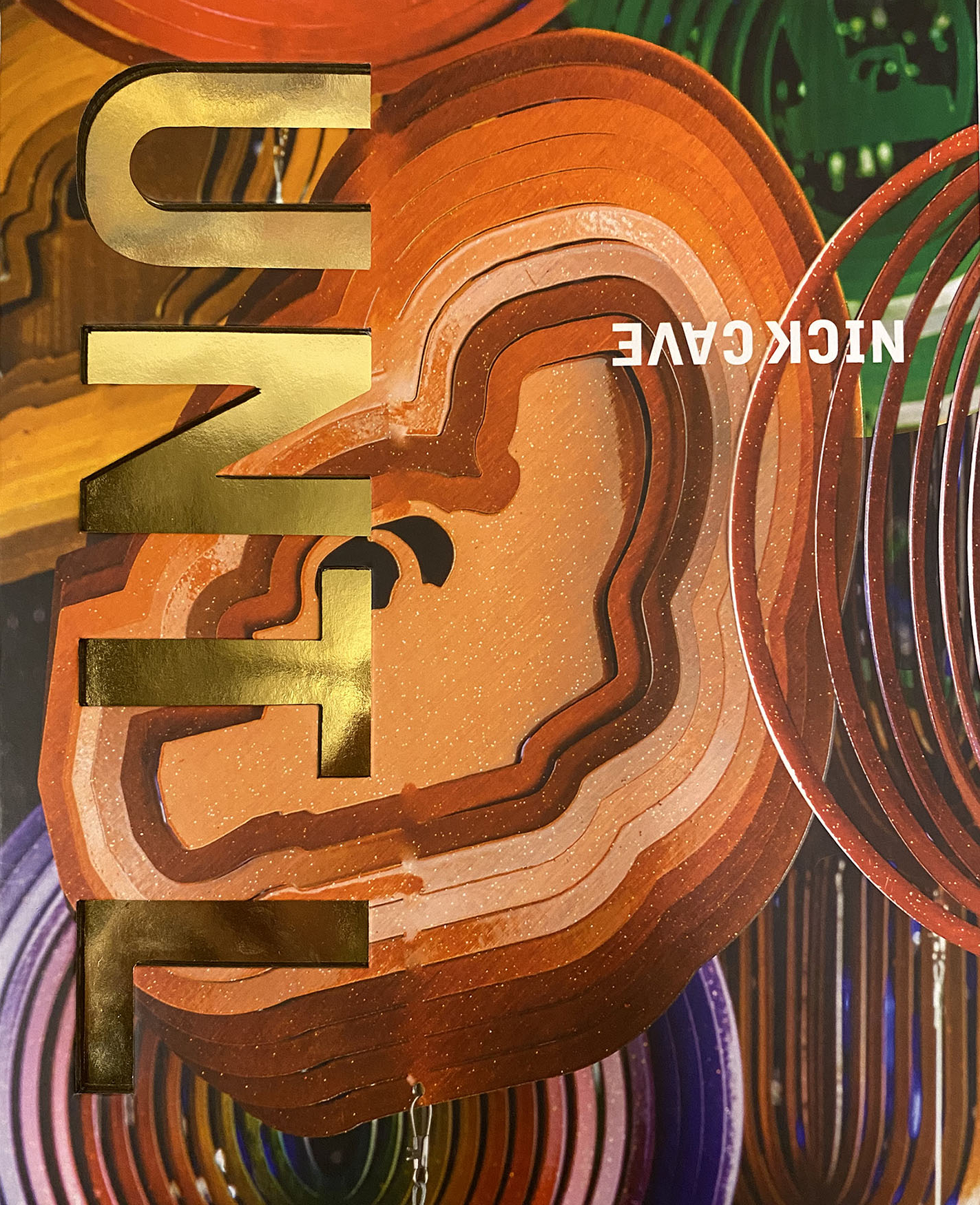
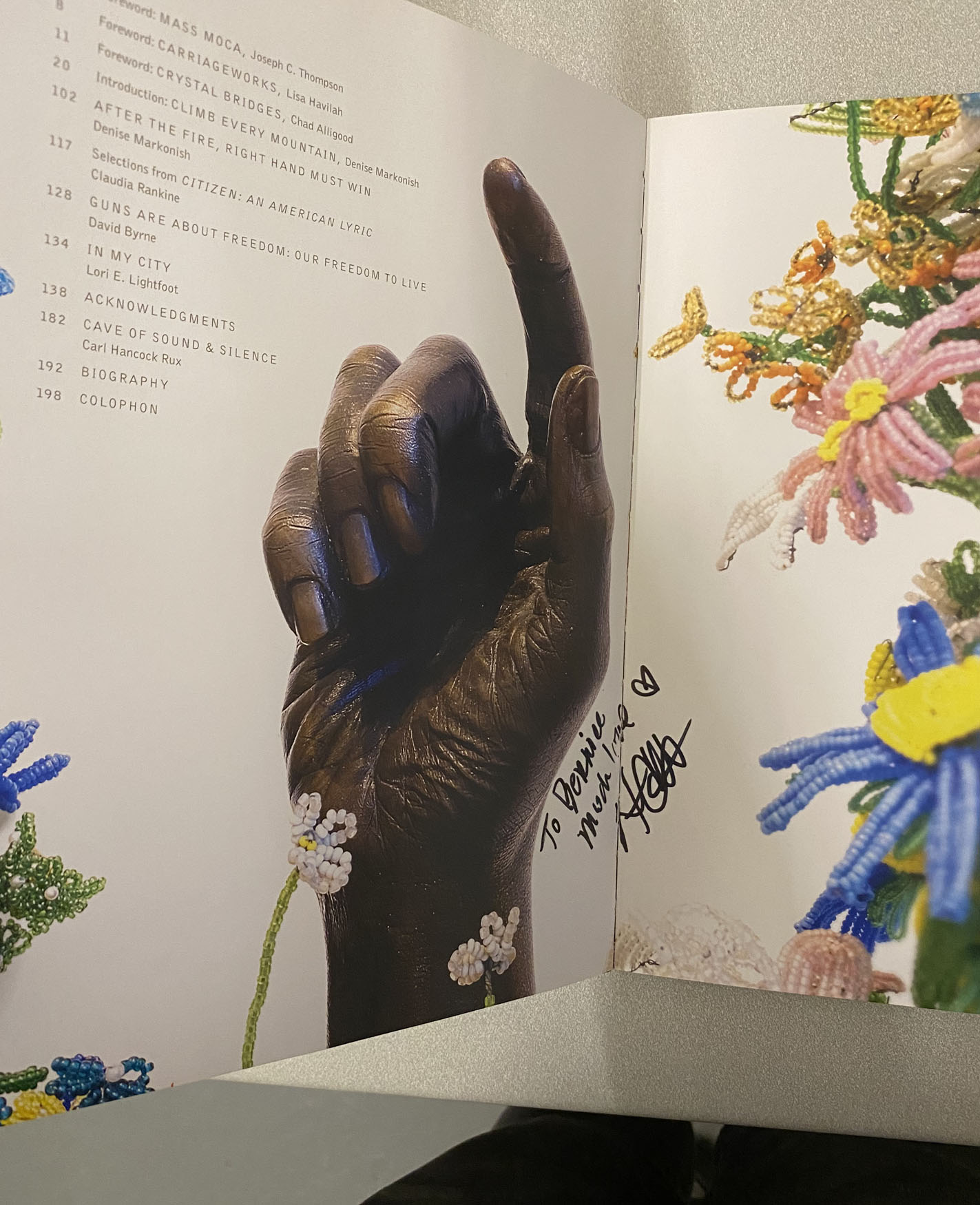
Book One: Nick Cave: Until, Denise Markonish, ed. (DelMonico/Prestel and MASS MoCA, 2016)
Nick Cave: Until is a book accompanying the exhibition of the same name that I curated at MASS MoCA in 2016. The show and book have been traveling the world starting in North Adams, MA and going to Sydney, Australia; Glasgow, Scotland; Bentonville, AK and more to come. Brilliantly designed by Bob Faust, the book features a cut away of the word “Until” on the cover. Whenever a book I have produced is delivered, I always keep the first copy for myself. Now, this wasn’t the first one, but shortly after the boxes arrived Nick and Bob were at MASS MoCA. We opened a box for a book signing and this one was at the top, with its cover put on backwards. Without even asking, Nick immediately signed it and handed it to me, knowing I would want this anomaly!

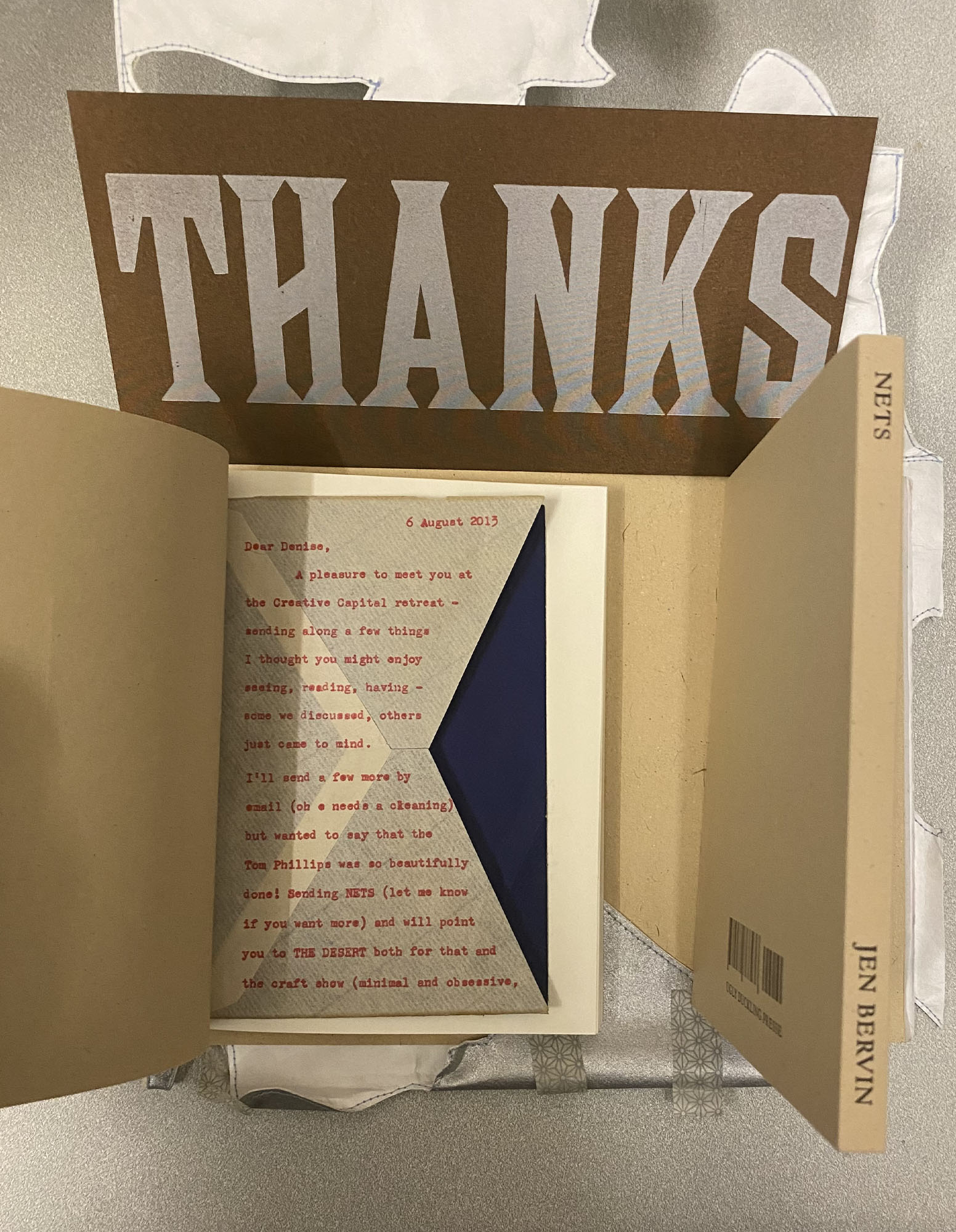
Book Two: Nets, Jen Bervin (Ugly Duckling Presse, 2004)
Ifirst met the artist Jen Bervin in 2013 at a retreat organized by Creative Capital to introduce their grantees to members of the art world. I had a one-on-one meeting with Jen and we immediately connected. Shortly after, I received this package in the mail, with her artist book Nets inside. For the project, Jen notes that she took Shakespeare’s sonnets and stripped them “bare to the nets to make the space between the poems open, porous, possible…” It is a perfect description of the way Jen sees the world with wonder and always encourages me to do the same. I keep them bound up in their original packing, but from time to time open the envelope to breath in its precious gifts.
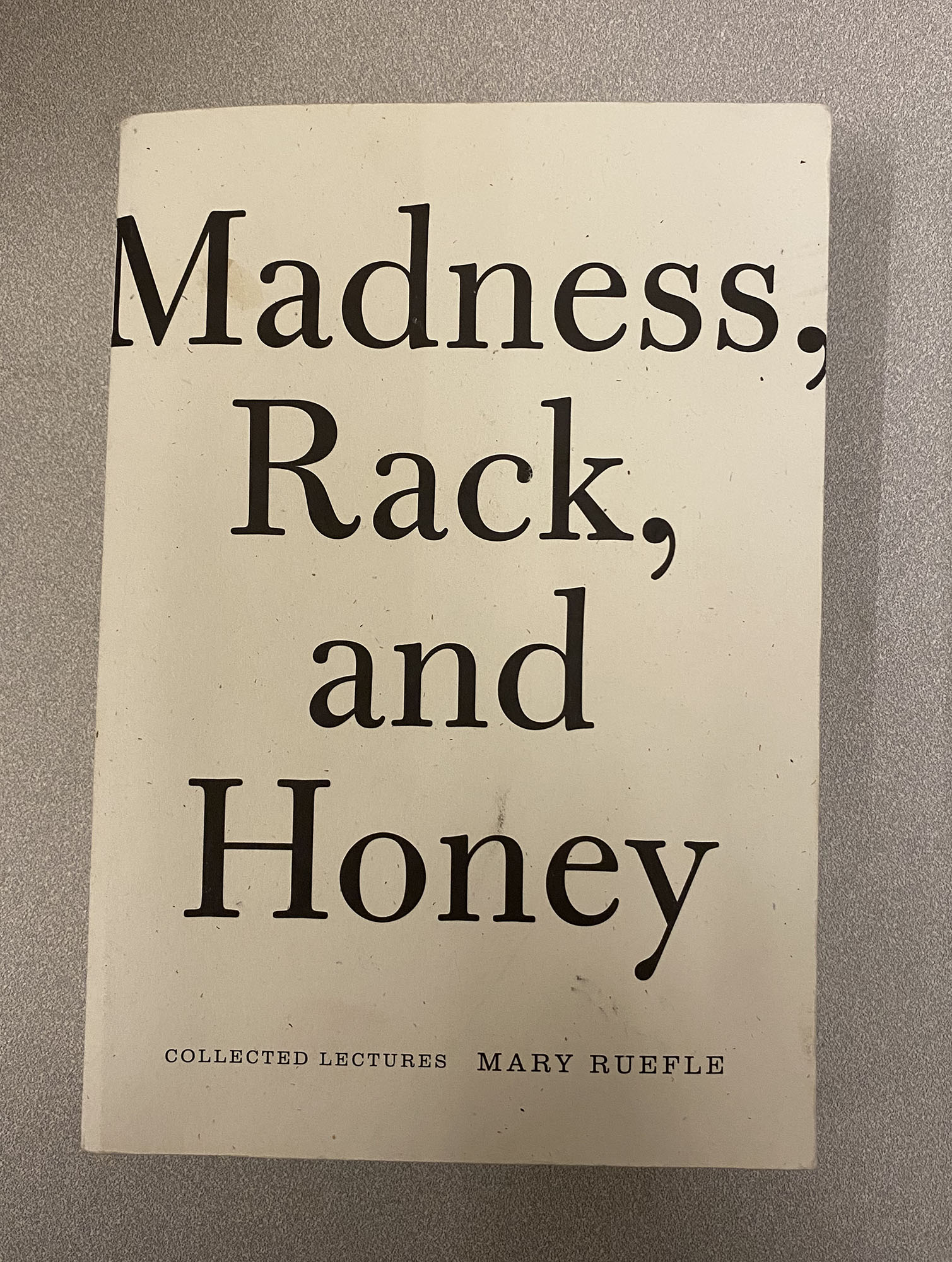
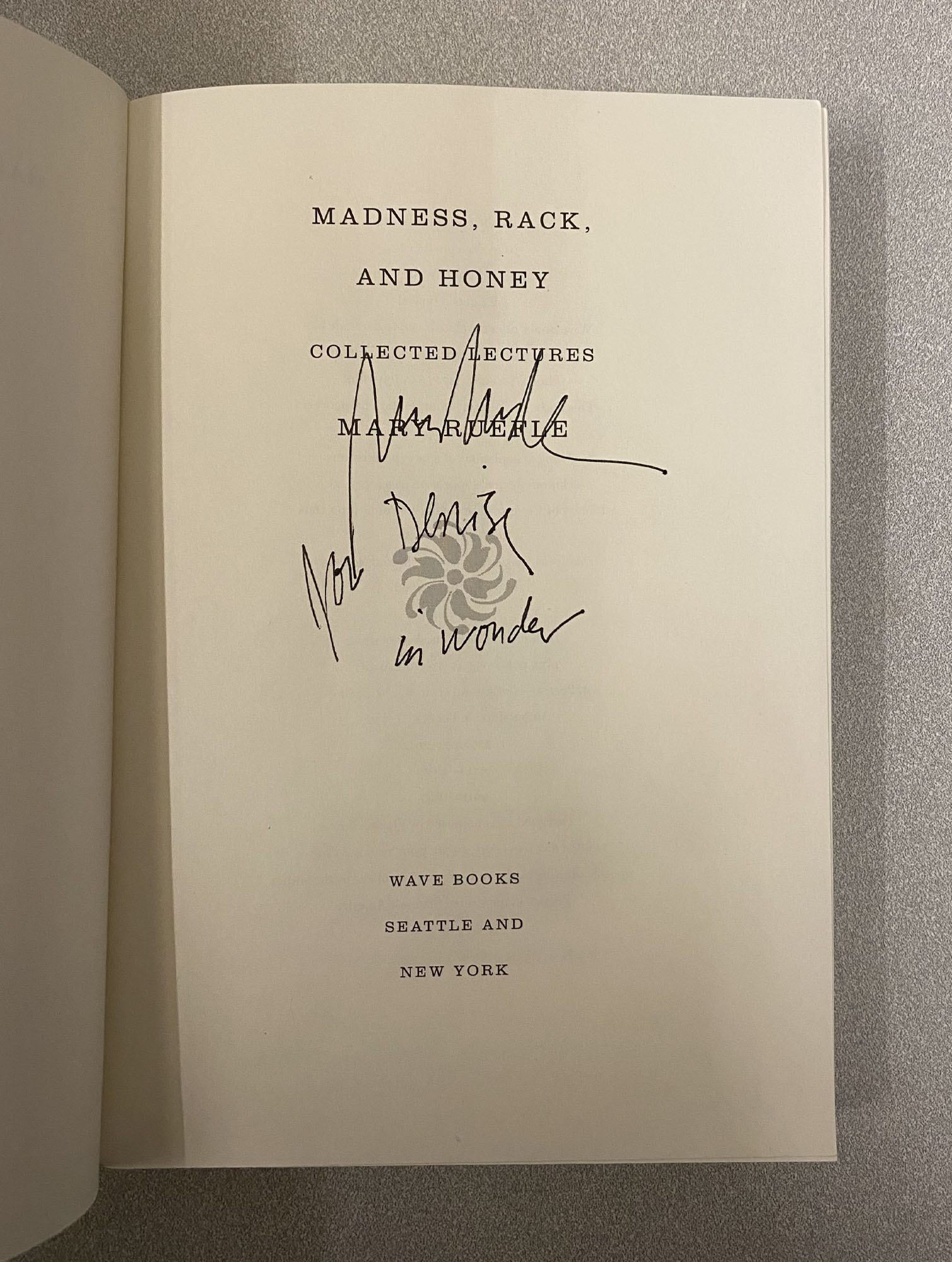
Book Three: Madness, Rack, and Honey, Mary Ruefle, (Wave Books, 2012)
Items two and three on this list are related. In the fall of 2014, I went to Jen Bervin’s studio to talk to her about an exhibition I was curating called Explode Every Day: An Inquiry into the Phenomena of Wonder (MASS MoCA, 2016). In her studio, there was a small wooden cabinet, which she opened to reveal correspondences between her and the poet Mary Ruefle (whose work was unknown to me at the time). These included small redacted book pages, tiny collages, bits of strings, feathers, and all manner of treasures. Later that day, at one of my favorite bookstores―Spoonbill and Sugartown―I came across Mary’s book Madness, Rack, and Honey. I devoured the essays and then turned to her books of poetry. I asked Jen if she could make an introduction. It turns out Mary lives only 30 min from me, so I went to her house and we talked for hours. When I left, she handed me a new inscribed copy of the book that says “in wonder.” She then contributed a suite of poems for the book that accompanied Explode Every Day.
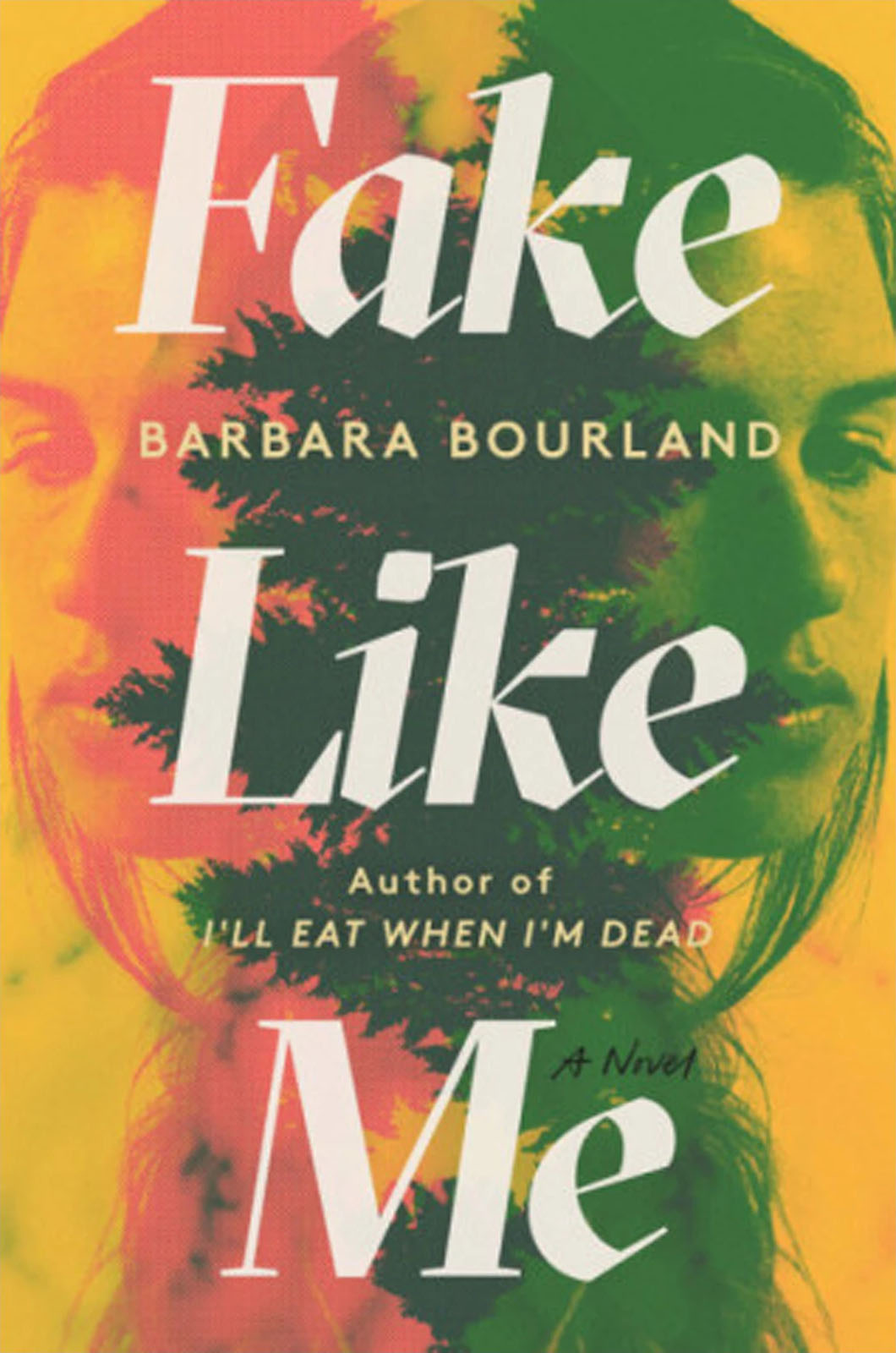
Book Four: Fake Like Me, Barbara Bourland (Grand Central Publishing, 2019)
In 2017 I was a visiting critic at the Wassaic Residency in upstate New York where I met Barbara Bourland. We hit it off and soon realized we have a friend in common (the artist David Brooks). We talked about all the foibles of both the art and publishing worlds. At the time, she was working on a new with an artist as its protagonist. We stayed in touch, and then in 2019, I received a copy of the book Fake Like Me in the mail. It is one of the truest novels about the art world I have read, but I had a fun surprise when in, one passage, the main character notes never hearing back from a curator from MASS MoCA. I also was touched by my inclusion on the book’s acknowledgements.
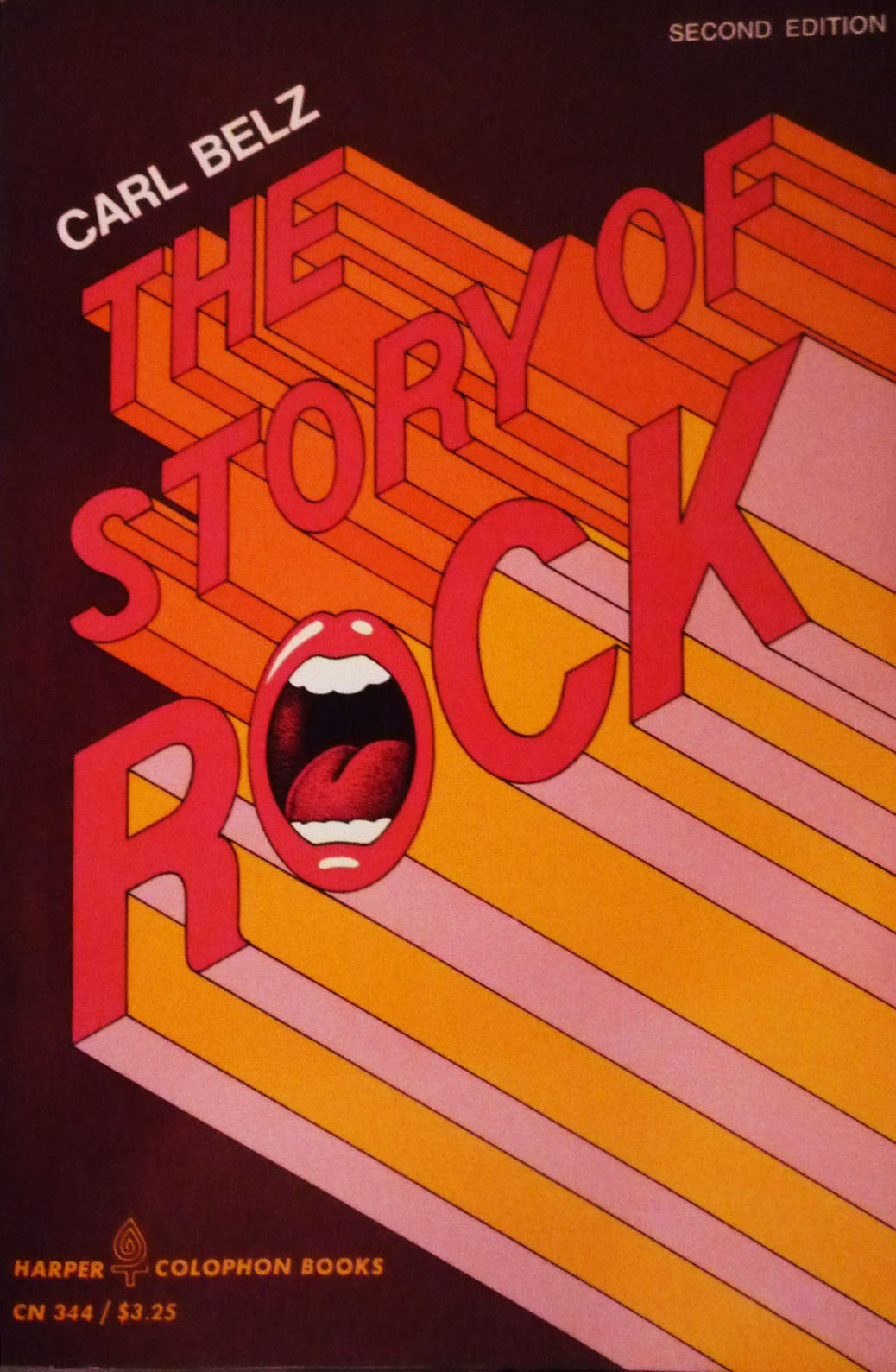
Book Five: The Story of Rock, Carl Belz (Oxford University, 1969)
This book has special meaning to me even though it is not one I have read cover to cover (though I have read many passages over the years). The book was written by Carl Belz who was my mentor in college. I met him when I was a freshman at Brandeis and he was the director of the Rose Art Museum, where I interned. Carl was perhaps the coolest person I had ever come across―he would tell me stories about having his portrait taken by Man Ray, hanging out with Jasper Johns and Robert Rauschenberg, and once taking a doodle from the butcher paper covering a restaurant table by Claes Oldenburg. He was the first art world person who taught me that you can create your own universe and support artists wholeheartedly―it was the like Sol LeWitt telling Eva Hesse to “just do,” a text Carl also introduced me to. Years after I graduated I came across this book that Carl had written about music. This discovery only reconfirmed him as one of the coolest people I ever met. Carl passed away in 2016, and this book reminds me of our conversations.
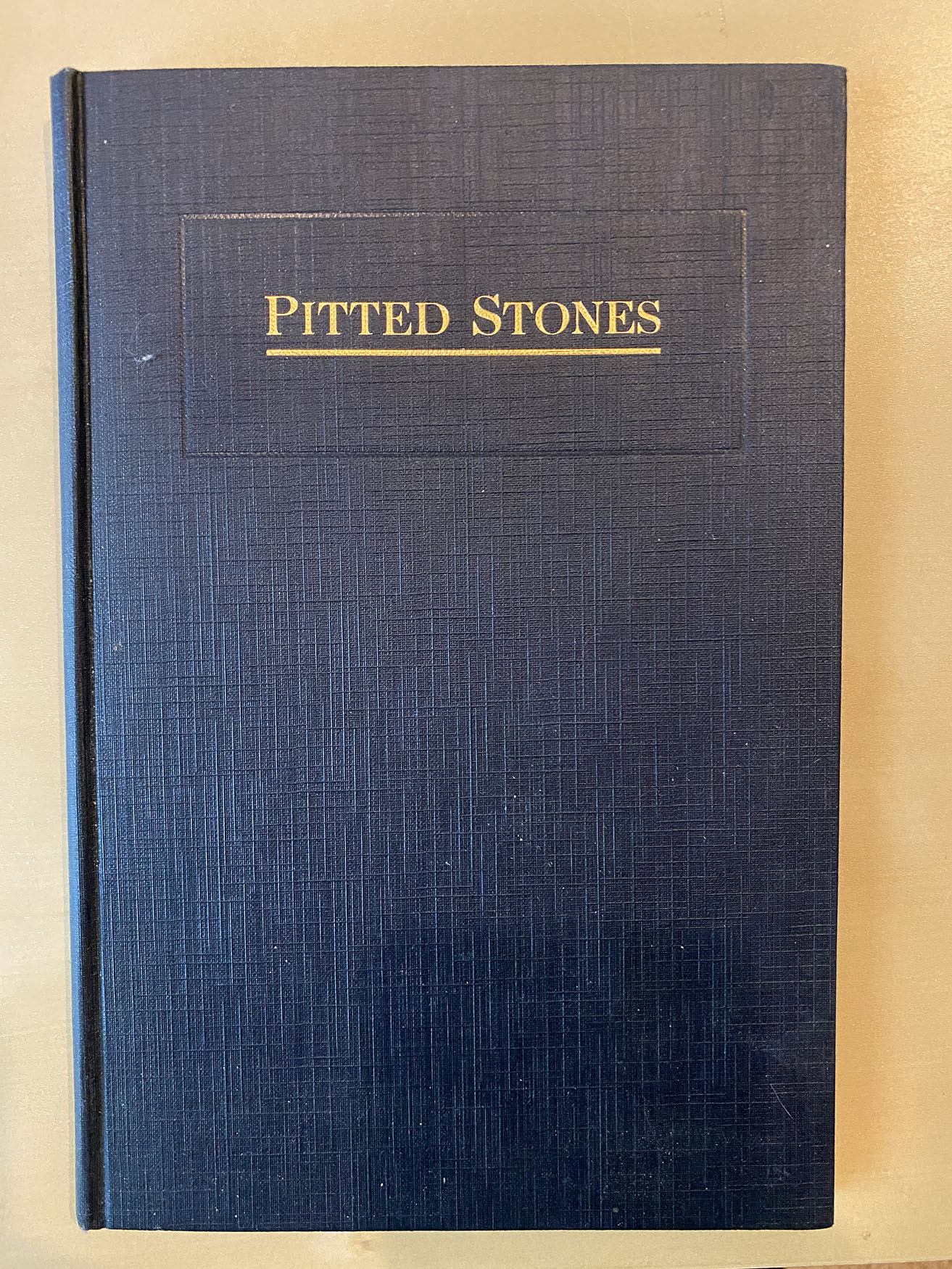
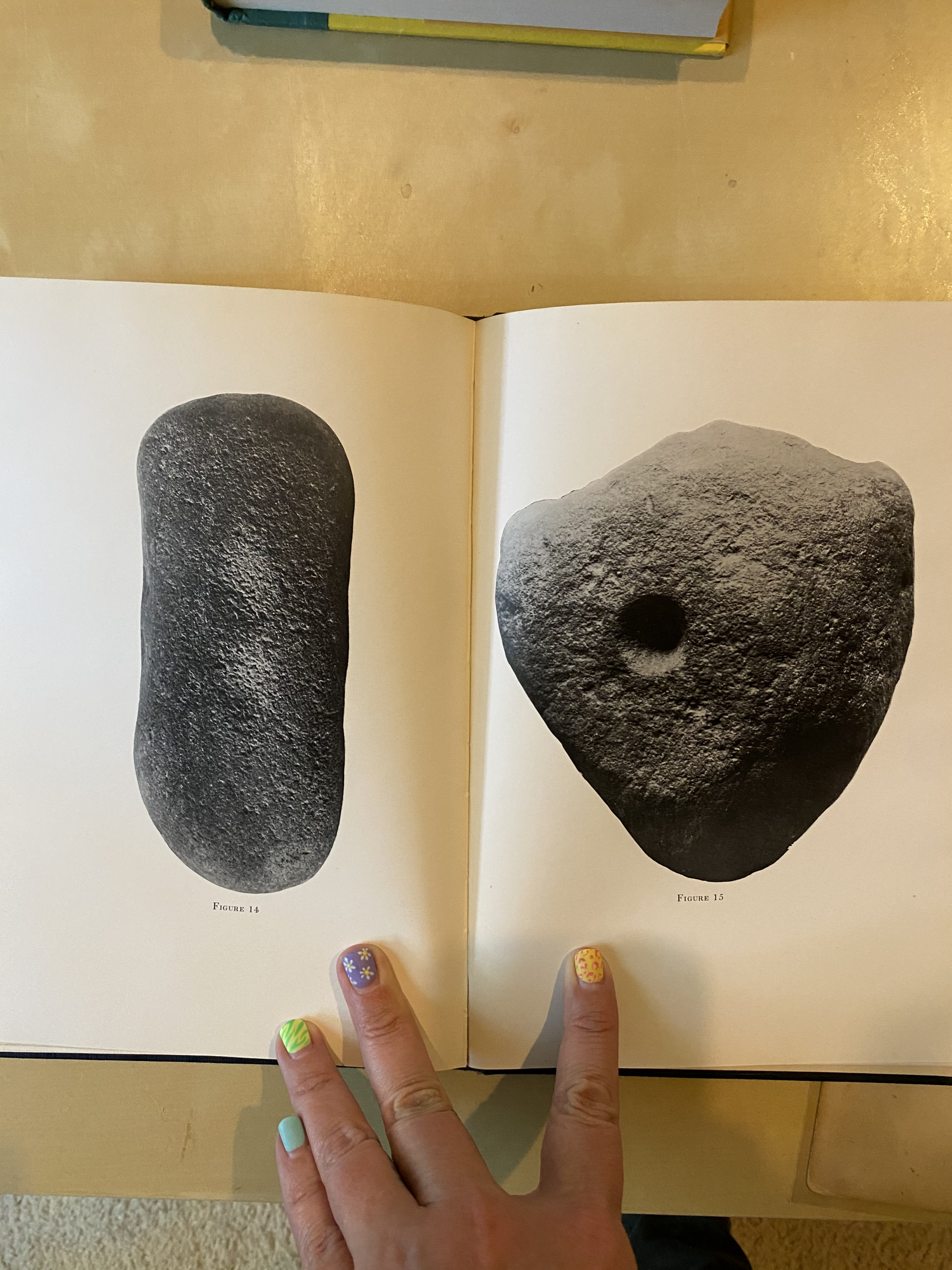
Book Six: Pitted Stones: A Paper Read Before the Pocumtuck Valley Memorial Association at its Annual Meeting, February 24, 1925, J.M. Arms Sheldon (Self-published, 1925)
In July 2019 I was on an excellent first date in Shelburne Falls, MA and we were perusing some used book stores (both of us being drawn to esoteric books and images). I found this slim volume, which is less an actual book than a paper an anthropologist/geologist had bound. Set in the middle. were black and white photos of rocks with beautiful divots, or pits, inside. As a kid, I wanted to be a geologist so I am always drawn to the lithic. After buying the book I did some research I realized that these pits were man-made by indigenous tribes (used for grinding seeds and nuts). I was also delighted that these particular stones were studied in Deerfield, MA by J.M. Arms Sheldon who I assumed was a man but turns out to stand for Jennie Maria Arms.
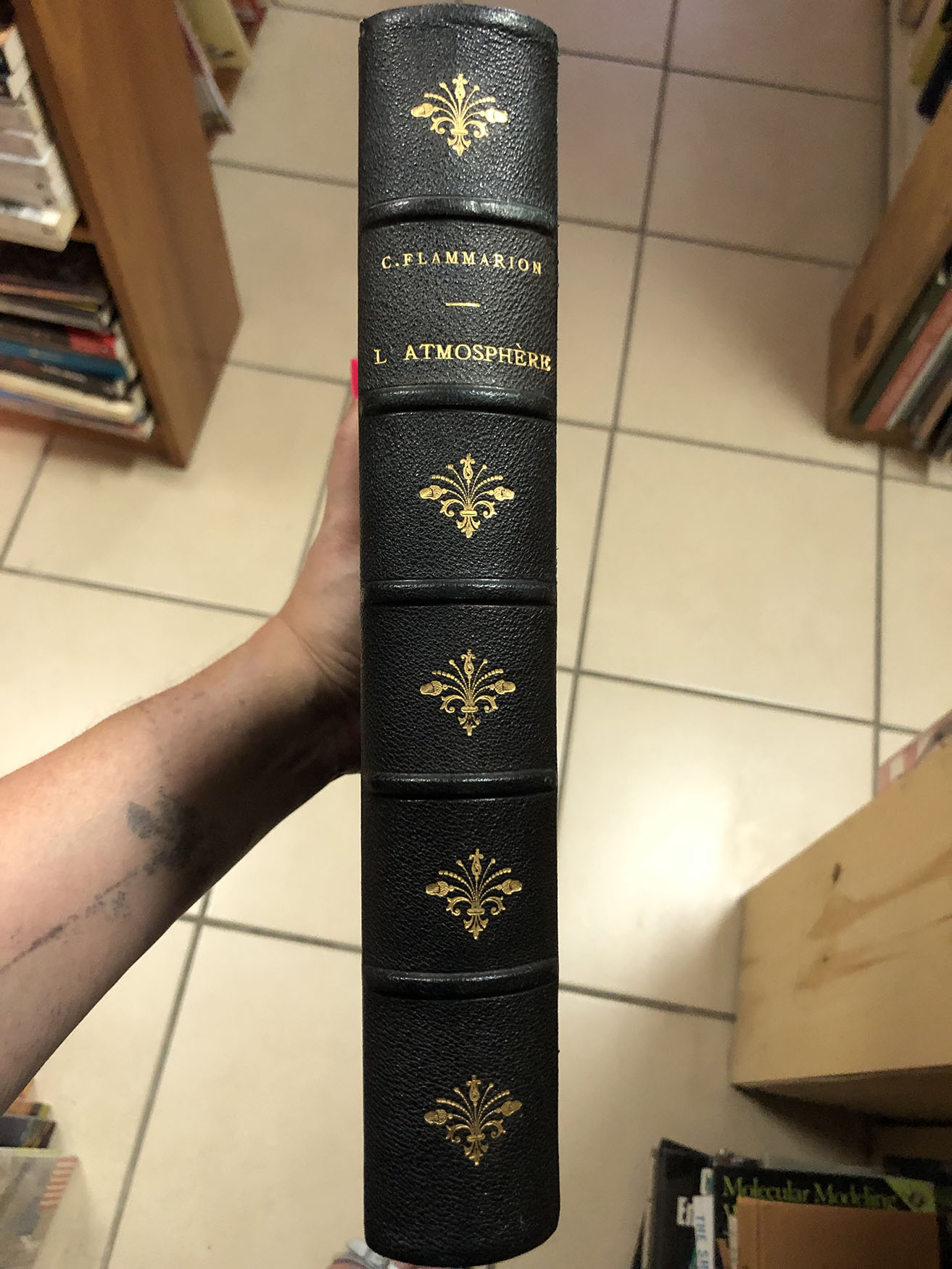
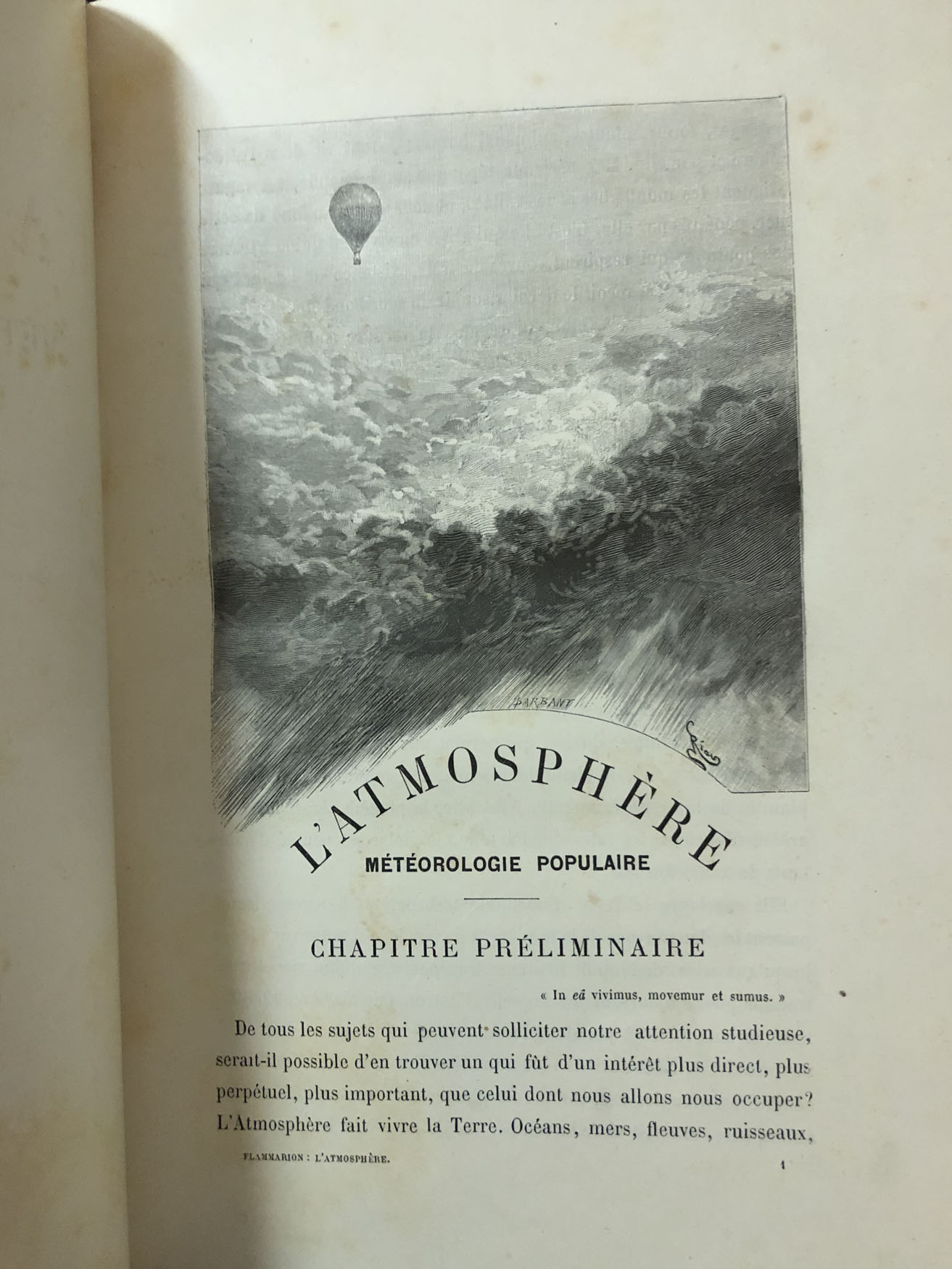
Book Seven: L’Atmosphère: Météorologie populaire, Camille Flammarion (Librairie du Cardinal, 1888)
In 2019 I was headed to Maine to do a residency at the Haystack Mountain School of Crafts in Deer Isle. On my way, I stopped to visit my brother who lives outside of Portland, and we went to a favorite book store called the Green Hand. I was browsing the science section (I have a deep fascination with old scientific illustration), and found this tome titled L’atmosphere. There was nothing on the cover that would hint at the wonders within―small etchings of rainbows, hot air balloons, aurora borealis, etc. The book is in French (of which a read very little) and was a little above my price point, so I photographed my favorite pages, and put it back on the shelf. The whole time at Haystack I thought about that book. I was relieved, when on the way home I stopped at the Green Hand and it was still (unsurprisingly) there waiting for me to take it home.
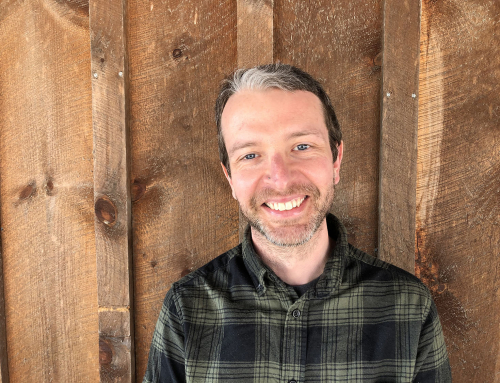
Photo: Michael Oatman
ABOUT THE AUTHOR: Denise Markonish
Denise Markonish is the senior curator and director of exhibitions at MASS MoCA. Her exhibitions include Glenn Kaino: In the Light of a Shadow; Suffering from Realness; Trenton Doyle Hancock, Mind of the Mound: Critical Mass; Nick Cave: Until; Explode Every Day: An Inquiry into the Phenomena of Wonder; Teresita Fernández: As Above So Below; Oh, Canada; Nari Ward: Sub Mirage Lignum; and Badlands: New Horizons in Landscape. She edited the books Teresita Fernández: Wayfinding (DelMonico/Prestel) and Wonder: 50 Years of RISD Glass, and co-edited Sol LeWitt: 100 Views (Yale University Press). Markonish has taught at Williams College and the Rhode Island School of Design, was a visiting curator at Artpace, San Antonio, and Haystack School of Craft, Deer Isle, Maine.
Thanks to hundreds of readers who have given donations big and small, Gwarlingo remains ad-free. Donors who give $100 become members. If you love Gwarlingo, please consider giving back.


I’m really shocked that the links you provide for the books are to Amazon. People should buy books from their local bookstores! Many, like Everyone’s Books in Brattleboro VT will ship books to your home. Please stop this practice! I’m a recent subscriber who is now reconsidering continuing my subscription.
Thank you so much for the note! We support indie bookstores and personally buy hundreds of books from them every year. You are absolutely right to do so as well. At the same time, we provide these articles for free to the public without banner ads or a paywall, and would ideally like to cover at least some of our costs, and we do get a little bit of affiliate money from Amazon every time someone purchases a book through a link on our site. We have previously included Indiebound links as well, but found that no one used them. Thanks to your thoughtful comment, we will reinstitute the IndieBound links as an additional option on a trial basis for the next couple of months and see if people find them helpful. We appreciate it is a complicated line to walk, and absolutely understand if you wish to read your art news elsewhere! Thank you so much for your well-considered comment.